Harvester Peach
A Backyard Classic Worth Every Bit of the Work
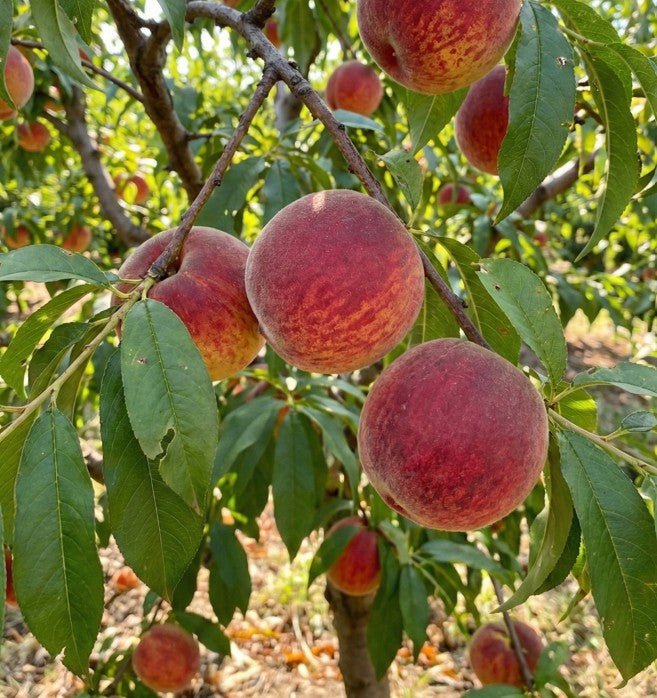
The Harvester Peach (Prunus persica 'Harvester') is the kind of fruit tree that becomes the centerpiece of a backyard orchard almost immediately. Each spring, the bare branches fill with a cloud of fragrant, shell-pink blossoms before a single leaf appears, drawing in early pollinators and signaling that the growing season has arrived. By midsummer, those same branches are bowing under the weight of medium to large freestone peaches, their golden-yellow skin flushed with deep carmine red, flesh firm and dripping with juice.
What Makes Harvester Stand Out
Harvester is a time-tested cultivar prized for reliable productivity and excellent fresh-eating quality. The freestone pit separates cleanly from the flesh, which makes it a favorite for home canners, bakers, and anyone who just wants to slice a peach without wrestling with the pit. The flavor is sweet with just enough acidity to keep it interesting, and the firm texture holds up beautifully in cobblers, preserves, and grilled preparations. Harvester also has the advantage of being self-pollinating, so a single tree is capable of producing a full crop on its own.
Seasonal Interest Beyond the Fruit
Spring kicks off with those showstopper pink blossoms, which carry a light, sweet fragrance that carries on the breeze. The glossy, lance-shaped foliage fills in quickly after bloom, providing dense, lush summer shade. In fall, the leaves turn shades of warm yellow before dropping, leaving an attractive open canopy structure for the winter months. The tree grows quickly and responds well to annual pruning, which keeps it at a manageable height for harvesting and gives you control over the shape.
Siting for Success
Harvester Peach performs best in USDA hardiness zones 5 through 9. It requires approximately 750 chill hours, the number of hours spent below 45 degrees Fahrenheit during winter, to break dormancy and bloom reliably in spring. This makes it well suited to most of the country's temperate regions, from the Mid-Atlantic and Midwest to the upper South and parts of the Mountain West. Plant it in full sun with excellent drainage, and it will reward you with heavy crops for many years.
Product Information
Product Information
Shipping & Returns
Shipping & Returns
Description
A Backyard Classic Worth Every Bit of the Work
The Harvester Peach (Prunus persica 'Harvester') is the kind of fruit tree that becomes the centerpiece of a backyard orchard almost immediately. Each spring, the bare branches fill with a cloud of fragrant, shell-pink blossoms before a single leaf appears, drawing in early pollinators and signaling that the growing season has arrived. By midsummer, those same branches are bowing under the weight of medium to large freestone peaches, their golden-yellow skin flushed with deep carmine red, flesh firm and dripping with juice.
What Makes Harvester Stand Out
Harvester is a time-tested cultivar prized for reliable productivity and excellent fresh-eating quality. The freestone pit separates cleanly from the flesh, which makes it a favorite for home canners, bakers, and anyone who just wants to slice a peach without wrestling with the pit. The flavor is sweet with just enough acidity to keep it interesting, and the firm texture holds up beautifully in cobblers, preserves, and grilled preparations. Harvester also has the advantage of being self-pollinating, so a single tree is capable of producing a full crop on its own.
Seasonal Interest Beyond the Fruit
Spring kicks off with those showstopper pink blossoms, which carry a light, sweet fragrance that carries on the breeze. The glossy, lance-shaped foliage fills in quickly after bloom, providing dense, lush summer shade. In fall, the leaves turn shades of warm yellow before dropping, leaving an attractive open canopy structure for the winter months. The tree grows quickly and responds well to annual pruning, which keeps it at a manageable height for harvesting and gives you control over the shape.
Siting for Success
Harvester Peach performs best in USDA hardiness zones 5 through 9. It requires approximately 750 chill hours, the number of hours spent below 45 degrees Fahrenheit during winter, to break dormancy and bloom reliably in spring. This makes it well suited to most of the country's temperate regions, from the Mid-Atlantic and Midwest to the upper South and parts of the Mountain West. Plant it in full sun with excellent drainage, and it will reward you with heavy crops for many years.